Step-by-Step Instructions
- Lay a set of We Engage Cards image-side up on a table.
- Invite your group to browse all of the images.
- Pose a question/statement to your group to reflect on, eg What is one value that guides your life?
- Ask one person at a time to select an image and share the story of how it represents their response to your question/statement.
- Continue sharing.
Buy We Engage Cards
Resources
Here’s a quick introductory video to learn more about these magical cards:
Order Now
Video Tutorial
How To Play Narrative
These cards are one of my favourite resources to inspire sharing, interaction, and reflection.
While I use a commercial set of cards (click here to view them,) you can totally create your own and achieve the same outcomes.
There are literally dozens of ways to use these cards to invite your group to play, interact and share.
Ultimately, they are a tool you can use to inspire powerful conversations and deeper connections, not only with other members of your group but to the broader mission of your school, organisation, family, etc.
Here’s a typical sequence I have presented many times to ignite engagement.
First, I lay all of my cards, image side up on a table for all to see. With my group gathered around the table, I then invite them to take a few moments to browse the gallery of pictures.
As they say, a picture’s worth a thousand words. I pose a question or make a statement and then ask each person to pick one card that best represents their response.
For example, here is a selection of possible questions you could ask:
- Share a personal story inspired by one of the images;
- Choose a card that best represents how you are feeling right now;
- Pick a card that reflects the sort of future would you like to create;
- Choose one card that represents a personal (or corporate) belief or value.
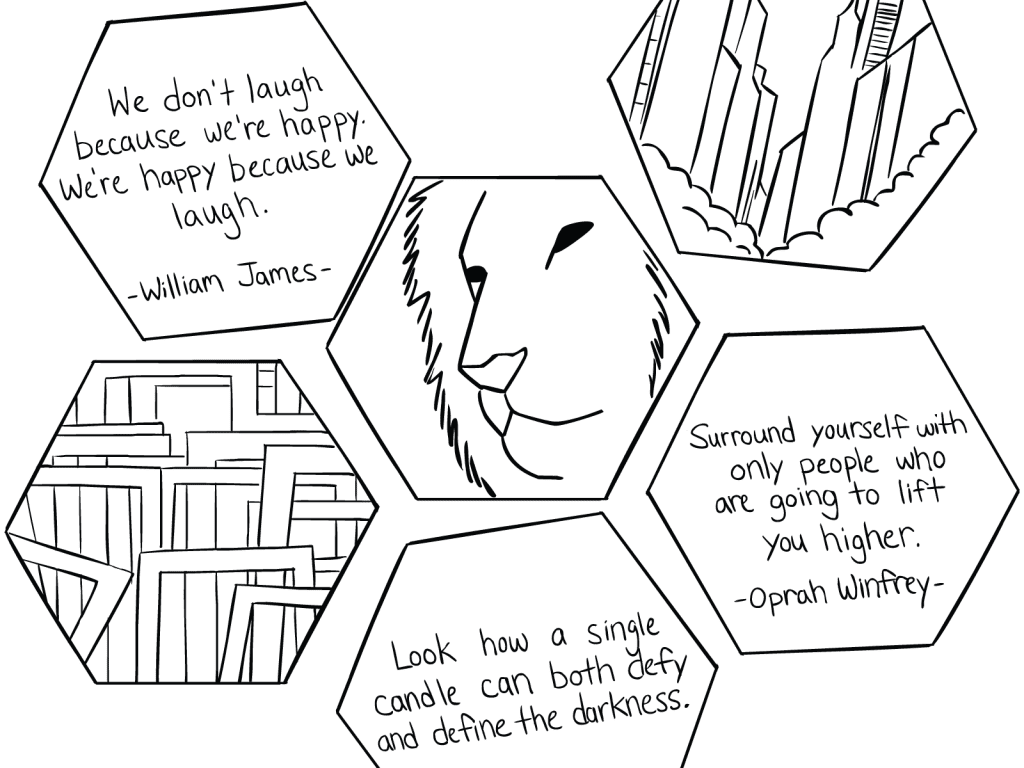
You can do exactly the same with the quote-side of the cards, too. Some quotes are more specific than others, but most can be interpreted in multiple ways which make them ideal for provoking conversation.
Generally, I invite a small number of people to share their responses before progressing to the next part of my program.
Take a look at the Variations tab to explore more ways to be inspired by these cards.
Practical Leadership Tips
If your group is larger than the number of cards you have, simply ask people to point at the card they have chosen.
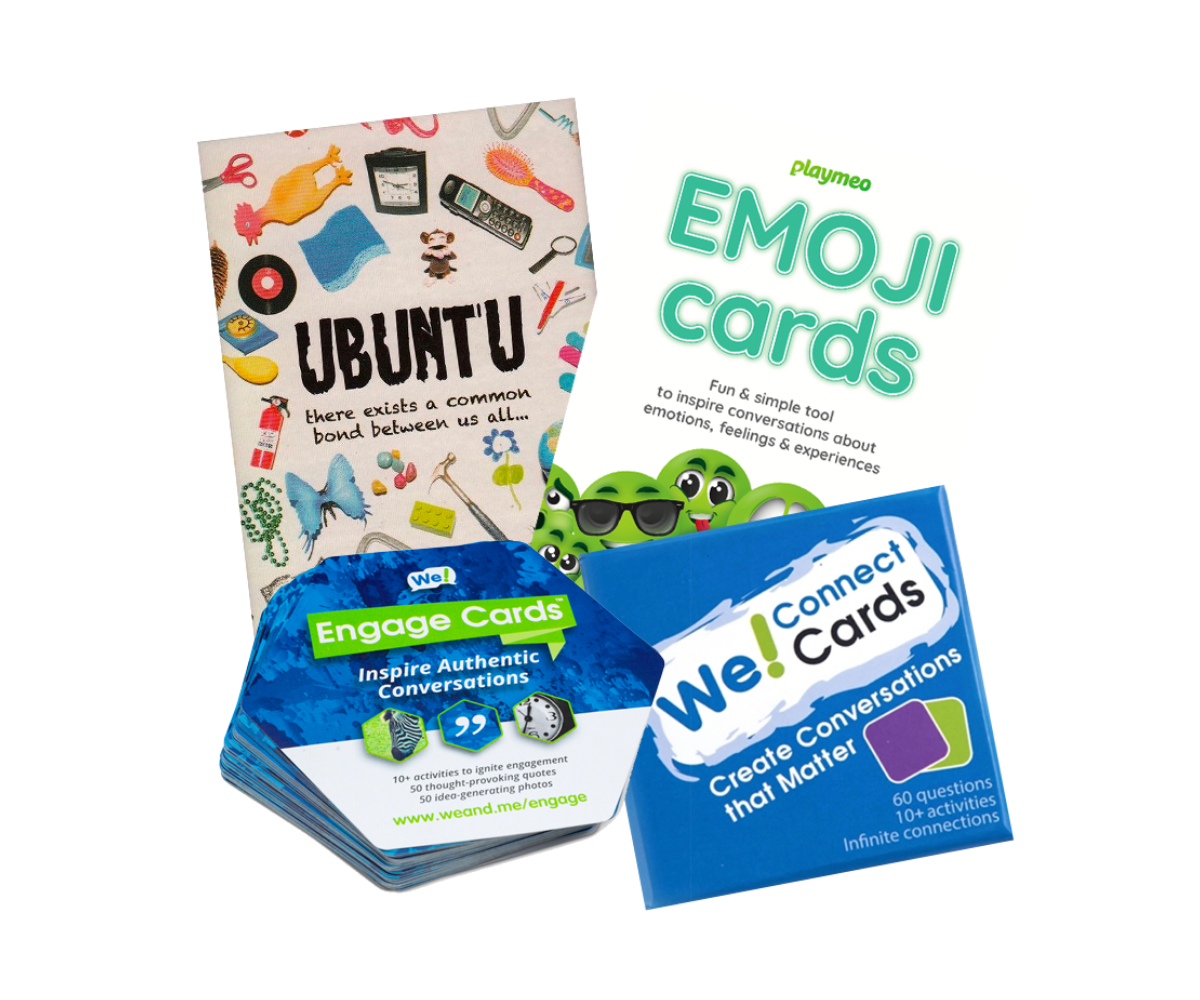
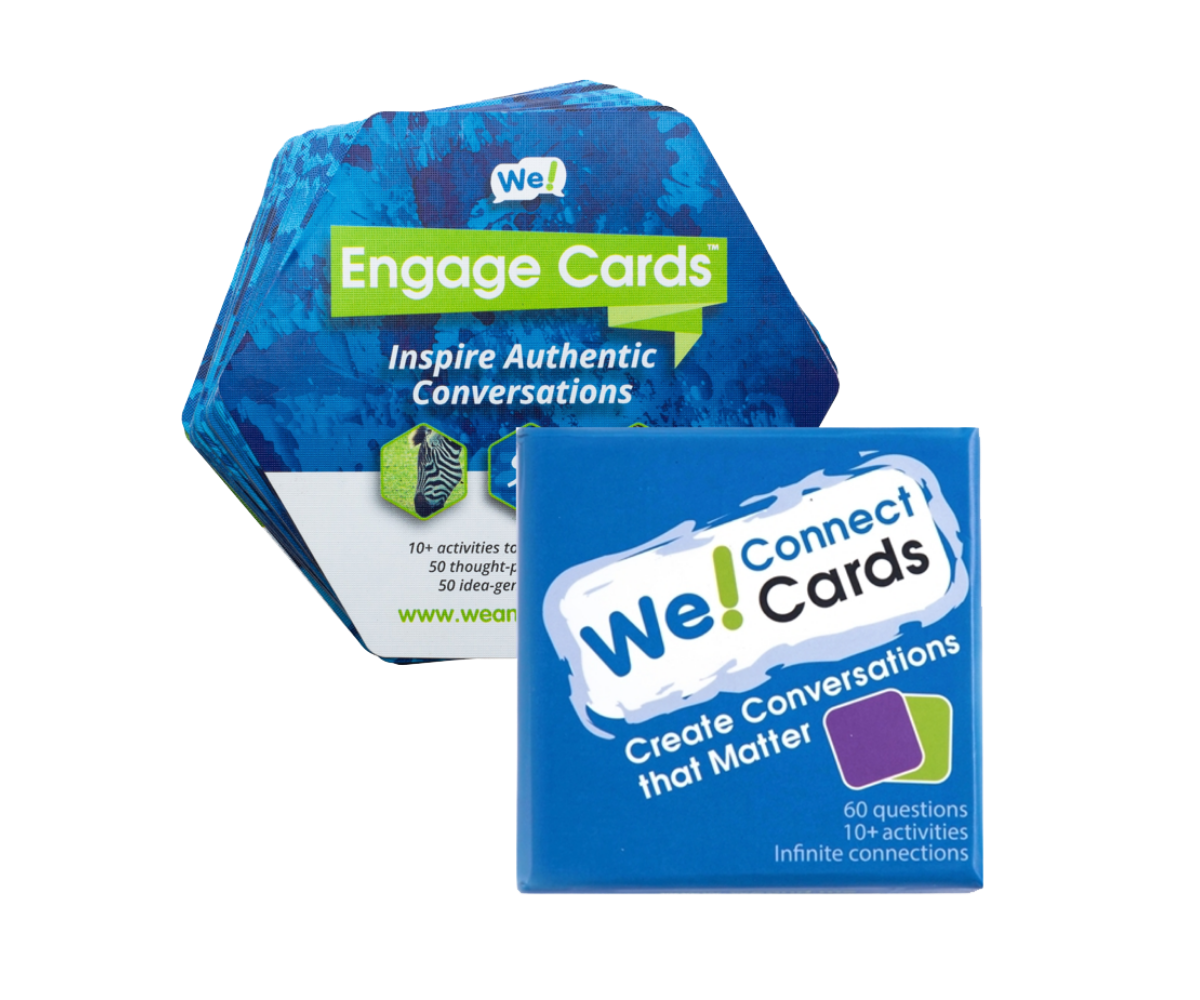
If We Engage Cards are new to you, then you have to check out We Connect Cards, too (produced by the same people.)
Note, the We Engage Cards are purposefully designed as a hexagon shape, which means when placed together, they can form a beautiful mosaic of images and/or quotes.
To create your own set of We Engage Cards, gather a lot of newspapers and magazines for your group to browse through and cut out to paste onto index cards. There is no shortage of images to choose from. And if you want to produce a series of cards with quotes on them, just enter ‘famous quotes’ into your favourite internet search engine and you’ll find more than you could possibly use.
A deck of We Engage Cards comes with 10+ activities you can use that will (as they proudly state on the packaging) inspire authentic conversations.
Social-Emotional Learning
You could integrate We Engage Cards as part of a well-designed SEL program to develop your group’s abilities to understand their emotions, thoughts and values and how these influence behaviour in different situations.
Specifically, this activity offers ample opportunities to explore and practice the following social & interpersonal skills:
Self-Awareness
- Identifying Emotions
- Linking Feelings, Values & Thoughts
- Identifying Personal, Cultural & Linguistic Assets
- Recognising Strengths, Prejudices & Biases
- Demonstrating Self-Confidence, Honesty & Integrity
- Experiencing Self-Efficacy
- Having A Growth Mindset
Self-Management
- Demonstrating Self-Discipline & Self-Motivation
- Setting Personal & Group Goals
Social Awareness
- Taking Other’s Perspectives
- Demonstrating Empathy & Compassion
- Understanding & Expressing Gratitude
- Appreciating Diversity
Relationship Skills
- Communicate & Listen Effectively
- Seeking and/or Offering Support
- Build Positive Relationships
Responsible Decision-Making
- Demonstrating Curiosity & Open-Mindedness
- Making Reasoned Judgements
- Promoting Personal & Collective Well-Being
You can learn more about SEL and how it can support character education here.
Health & Wellness Programming
Emotional Intelligence
The ability of these cards to inspire authentic conversations make them ideal for use in any program that seeks to build the social skills and emotional intelligence of your group. To this end, be sure to start in pairs or small teams of 3 to 5 people (at the most) to promote the most conducive environment for sharing. In advance, during or at the conclusion of their use, invite your group to reflect on the following questions to explore a range of emotional competencies:
- What did you notice about the nature of our sharing just now?
- Did you feel comfortable? Why or why not?
- What sorts of individual and/or team behaviours promote sharing? Be specific.
- In what ways were compassion and empathy expressed during this exercise?
Goal-Setting
The quotes and images are purposefully evocative. Use this stimulation to inspire forward-thinking thoughts about goals, objectives and visions. Take a look at the Variations tab for some useful ideas to help you integrate these cards into a conversation that aims to set individual or group goals.
Mindfulness
Being still, quiet and present with a quote or an image for a short period of time is an ideal mindful practice. Sometimes it may not even be necessary to share out loud what transpires, rather, you could invite each person to write notes or produce artwork themselves to explore the fullness of their ideas.
Popular Variations
- Story Swap: Each person chooses a card that depicts an image that best represents their response to a question you have posed, eg your best holiday. Form small teams of 2 or 3 people and invite each person to share a story inspired by the image they see on one of their partner’s cards.
- Quick Quotes: Invite each person to choose a card that contains a quote that they believe in.
- Deeper Intro: As people arrive for your program, invite them to peruse the cards (quote side facing up) and choose one that represents one of their core values. Later, when engaged in a series of experiences that break the ice, invite people to share what their quote was and why.
- Visualising Values: Ask each person to write one value they hold true in their lives on a sheet of paper. Then invite each person to choose one or more image cards that represent a story where they’ve seen this value come alive.
- Tools for Trust: Spread the deck of cards, image side up. Invite each person to choose one image they feel represents a crucial ingredient for building a relationship of trust. Note the emphasis on trust, not just any old relationship.
- Circle of Quotes: Lay your cards quote-side facing up in a large circle on the floor. Ask your group to wander past all of them and stand by the one that best reflects their response to a question you have posed.
- Improv Story: Randomly distribute one card to each person and form small teams of 5 to 8 people. In less than 60 seconds, challenge each team to create an improvisational story featuring all of the objects in the images.
- Inspiring Intentions: Form small groups of 3 to 5 people and spend 15 -30 minutes choosing, discussing and reaching consensus on a single card that represents each group’s intention for the day. Focus on (a) the quote, (b) the image, or (c) both the quote and the image into account.
- Take a look at We Connect Cards, a wonderful set of question cards that will also inspire meaningful conversations in your group.
Virtual Adaptation
- Happily, the folks at We & Me have produced a free deck of We Engage Cards for virtual programs. Click here to view them. If you do integrate them into your online programs, be sure to attribute them appropriately.
- Gather and produce a colourful collage of photographs and images on one or more slides which you can then display to your online participants. Padlet is a powerful online way to create virtual imageboards like those featured in the Reflection Board activity.
You Might Also Like...
 2
2
Photo Language
Simple & powerfully emotive processing strategy.
 5
5
Starts With
Simple processing exercise using alphabet letter set.
 3
3
Paired Shares
Non-threatening method to invite sharing in a group.
Useful Framing Ideas
It may sound like…
- “TAKE A LOOK AT THE SELECTION OF EVOCATIVE IMAGES I HAVE LAID ON THE TABLE. AS YOU BROWSE THEM, I WOULD LIKE YOU TO SELECT JUST ONE THAT CAPTURE’S HOW YOU FEEL AT THIS MOMENT ABOUT THE GROUP…”
- “YOU HAVE EACH BEEN GIVEN A RANDOM CARD ON WHICH THERE IS AN IMAGE AND A QUOTE. FOCUSED ON THE QUOTE, FOR NOW, I WOULD LIKE YOU TO FIND ONE OTHER PERSON AND SHARE WITH THEM WHAT YOU THINK ITS MESSAGE IS TRYING TO CONVEY. ONCE YOU HAVE BOTH SHARED, CONSIDER WHAT LESSON IT MAY HAVE FOR OUR GROUP TODAY…”
Source









Add your Comments...
Have you played this activity? What worked, what didn't work? What type of group? Do you have useful advice for other users? Do you know a fun variation?