Team-Building

Fun team-building games & activities that invite your group to interact, share & create something together

Say the words ‘team-building’ and most people picture a day off-site, a ropes course, or a well-meaning manager handing out name-tags. Some people smile. Others quietly look for the exit.

Yet team-building doesn’t have to be a big event, and it certainly doesn’t have to be awkward. Some of the most powerful team-building I’ve ever seen has happened in a classroom, on a camp oval or in a meeting room, in under 30 minutes, with little more than a rope and a few sheets of paper.

Team-building and problem-solving activities involve whole-of-group participation, focusing on developing practical group problem-solving, leadership, communication and teamwork skills. Sometimes called group initiatives, they are ideal for young people and adults, and for new and existing teams. They often stimulate significant growth for a group, especially when the group is given an opportunity to reflect on its experience afterwards.


What Is Team-Building?

In short, team-building is any experience in which a group interacts, shares and creates something together.

That’s it. No ropes course required. It’s worth unpacking each part, because all three matter:

  • Interacts – people talk, move, laugh and solve problems with one another, rather than sitting side-by-side waiting for instructions.
  • Shares – ideas, effort, frustration and success. People offer what they know, admit what they don’t and lean on each other. This is where vulnerability is invited to show up, and is the building block of trust.
  • Creates something together – a result that no one person could have produced alone, whether that’s a solution, a strategy, a record time or simply a shared story the group will retell for weeks.

When all three are present, you are building a team. When one is missing, you probably aren’t.

It’s just as useful to be clear about what team-building is NOT:

  • It’s not a day off. A fun outing can lift morale, but if nobody interacts beyond their usual circle, little changes.
  • It’s not a spectator sport. If one clever person can solve the problem while everyone else watches, it isn’t team-building.
  • It’s not a quick fix for a broken team. A game can open a conversation about trust or conflict, but it won’t resolve deep problems on its own.
  • It’s not only for corporate teams. Classes, sports teams, youth groups, staff rooms and committees all benefit from exactly the same experiences.

Essential Characteristics of a Great Team-Building Activity

Team-building problem-solving activities provide an opportunity for groups to communicate, cooperate and compromise with each other as they solve one or more problems as a team. The best group initiatives often feature:

  • Physical and verbal interaction among group members to solve problems
  • High levels of arousal, excitement and frustration, where patience is often required
  • Opportunities for leadership, trust, communication and group cooperation to emerge
  • A trial-and-error approach to learning
  • A focus on the process, and not just the task at hand

Notice how closely these line up with interacting, sharing and creating something together. That’s no accident.

If you are particularly interested in creative, lateral-thinking exercises, take a look at our fun team puzzles.

Small group team-building circle of fists

Does Team-Building Actually Work?

It’s a fair question, and the answer is encouraging, with a catch.

In 2009, a team of researchers led by Cameron Klein pulled together decades of studies on team-building with work teams. Overall, they found team-building had a positive, moderate effect across every kind of outcome they measured, with the strongest effects on how people felt about their team and on how well the team worked together. A plain-English summary of the same study adds the catch: the sessions that delivered the most benefit focused on setting goals and clarifying roles.

In other words, team-building works best when it has a purpose. A random game played to fill in time is still fun, but a game chosen because it helps your group practise something it needs, and followed by a conversation about what happened, is where the real value lies.

The Task Is Just The Excuse

Here’s something many people miss. In a good team-building activity, the task itself barely matters. Nobody’s career depends on how many sheets of paper they can hold between their elbows.

What matters is what happens along the way – who spoke up, who went quiet, how the group handled a setback, and what it decided to do differently next time. The activity simply creates the conditions for these things to happen. The learning shows up when you invite your group to talk about it.

That’s why I rarely run a team-building activity without leaving time to reflect. Even five minutes and a few simple questions, eg What helped us? What got in the way? What would we do differently?, will turn a fun game into a lesson your group will remember.

How To Sequence A Team-Building Session

Jumping straight into your most demanding challenge is one of the quickest ways to lose a group. People need to feel comfortable before they will take a risk, share an idea or put their hand up to lead.

In No Props No Problem, and in more detail in my Lazy Facilitator Playbook, I describe a five-step framework called the Play to Grow model.

The sequence is simple: Play > Interact > Share > Trust > Grow.

  1. Play – invite people to play, with plenty of choice and a compelling reason to join in. Play creates the energy, joy and safety that make everything else possible.
  2. Interact – playful moments open the door to interaction. The focus shifts from “me having fun” to “us having fun together”, and people start to notice what they have in common.
  3. Share – interaction creates opportunities to share preferences, experiences and ideas. You can only ever invite sharing, never force it. This is the step many programs skip, and it’s impossible to build authentic trust without it.
  4. Trust – sharing leads to deeper levels of trust, so people feel safe enough to take appropriate risks. Of course, trust is being nurtured from the very first moments of your program, not switched on at step four.
  5. Grow – with trust in place, people are ready to step out of their comfort zones, tackle real challenges and learn.

Notice how neatly this lines up with my definition of team-building. Groups that interact and share are well on their way to creating something together. The model is sequential, but not rigid. A short session may only get as far as Play, Interact and Share, and that’s entirely appropriate. Any time you invest in those first three steps will amplify everything that follows.

The ten team-building games and activities below are listed roughly in this order, from lighter challenges to the more demanding ones that ask for real trust.

Five Tips For Team-Building That Actually Works

Here are five things I’ve learned about leading team-building activities that people enjoy and remember:

  1. Start with why – Before you choose an activity, ask what your group needs to practise. Clearer goals? Better communication? Sharing the lead? Then pick the activity that gives them the most practice at it.
  2. Make it an invitation, never an obligation – Honour choice. Nobody should ever be forced to join in. Adults in particular can be wary of looking silly in front of colleagues, and an invitation is far more powerful than an instruction.
  3. Watch more than you talk – Once the activity is underway, your job is to observe. Note who leads, who follows, what helped and what got in the way. What you see will fuel the conversation afterwards.
  4. Let the group own the struggle – This is where it pays to be a ‘lazy facilitator.’ Resist the urge to rescue your group when they get stuck. My job isn’t to solve the problem for them, or create their energy for them. It’s to give them permission to discover their own.
  5. Keep the score secondary – A little competition can add energy, but it’s the seasoning, not the meal. Keep the focus on how the group worked together, not on who won.

A note for large groups: none of the activities on this page is tagged for groups of 30 or more, because most team-building works best in teams of up to 15. If you’re working with a big crowd, split into smaller teams and run several at once, or take a look at our fun games and my book Count Me In, which is packed with activities that work with big groups.

David Jenyns headshot

Dave

Team Manager

"Looking to make your team more productive or add value to your members? playmeo has the tools."

10 Fun Team-Building Games & Activities for Groups

I’ve handpicked ten of my favourite team-building games and activities from playmeo’s activity database. Some take 15 minutes, others up to 45. Three need no props at all, four are suitable for children aged 8 – 12 (Flip Over Ten, Group Juggle, Numbers Game and Magic Shoes), and Numbers Game can also be played online. They are listed roughly in the order I would sequence them, from lighter challenges to more demanding ones.

Click the links below to scroll directly to the activity.

Sheet of paper held between two hands, as featured in fun team-building challenge called Paper Holding game

1. Paper Holding

How many sheets of paper can two people hold off the ground using nothing but their bodies? That’s the deceptively simple question at the heart of Paper Holding. Small teams huddle around two of their members and start experimenting, with a few rules to keep things fair. Ideas fly, laughter follows and some wonderfully creative solutions emerge. Because it’s quick, playful and a little silly, it’s a terrific way to warm up a group’s problem-solving muscles before you tackle anything harder. It does involve close physical contact, so choose your moment. For the record, the best effort I’ve seen is 27 sheets. Can your group beat it?

Recommended group size: 3 – 8 people

Typical duration: 15 – 20 minutes

Why it’s great:

  • One simple prop
  • Very playful & fun
  • Inspires creative ideas
  • Everyone contributes
  • A record to chase
Flip Over Ten active memory challenge

2. Flip Over Ten

Ten playing cards lie face-down some distance away. Your group’s task is to turn them all over in order, from Ace to Ten, one person and one card at a time. Sounds easy enough, until people start forgetting which card was where. Before long, the group realises it needs a shared memory, a plan and a way of passing on what each person discovered. Every round gets a little faster as the team learns from its mistakes. Flip Over Ten is an active, fast-paced team-building exercise that’s easy to set up, and it makes a brilliant introduction to the idea that a group can be smarter than any one person in it.

Recommended group size: 8 – 15 people

Typical duration: 15 – 20 minutes

Why it’s great:

  • Simple set-up
  • Just a deck of cards
  • Active & fast-paced
  • Builds a shared memory
  • Improves with every round
Fun team-building game Group Juggle passing a series of balls across a circle

3. Group Juggle

This was one of the first group initiatives I ever experienced as a participant, more than 30 years ago, and it’s still a favourite. Your group stands in a circle and learns a simple passing sequence with one soft ball. Then a second ball joins in, and a third. Suddenly, everyone is juggling responsibilities at once, and the laughter starts. Groups soon discover that success depends on clear communication, good timing and everyone playing their part. The metaphors write themselves – think workload, deadlines and dropped balls. It works in almost any space, and the conversation afterwards is often as lively as the game itself.

Recommended group size: 8 – 15 people

Typical duration: 20 – 30 minutes

Why it’s great:

  • Simple, soft props
  • Gets progressively harder
  • Everyone has a role
  • Promotes communication
  • Powerful workplace metaphors
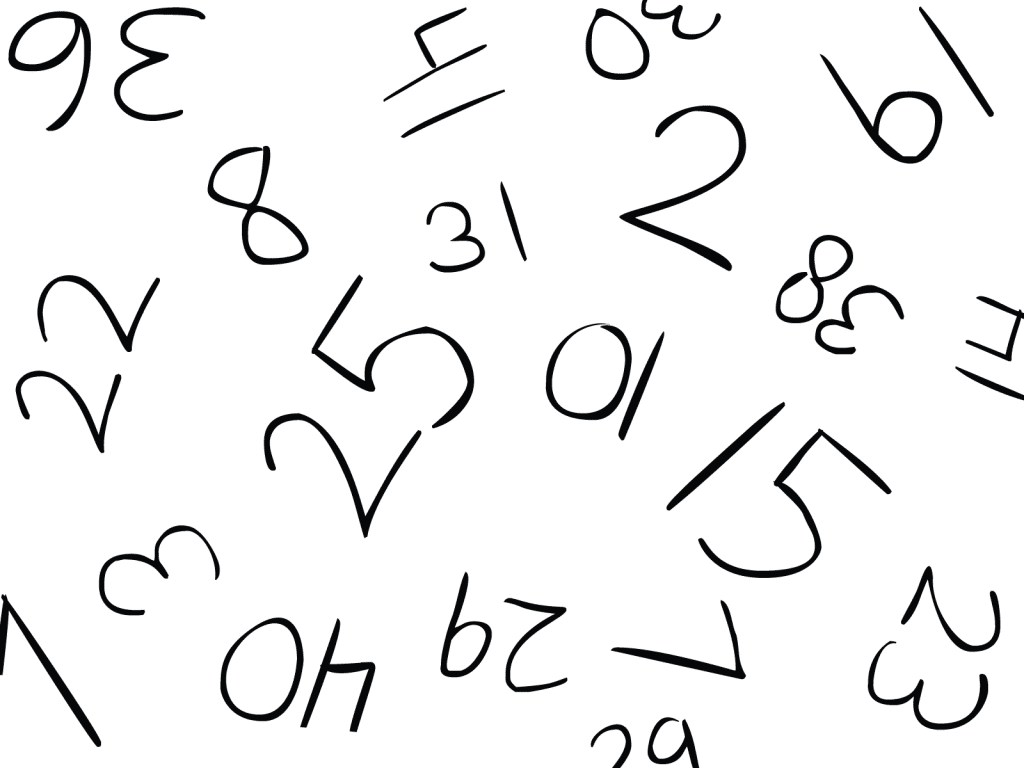
Illustration of Speed Numbers sheet used as continuous improvement activity

4. Numbers Game

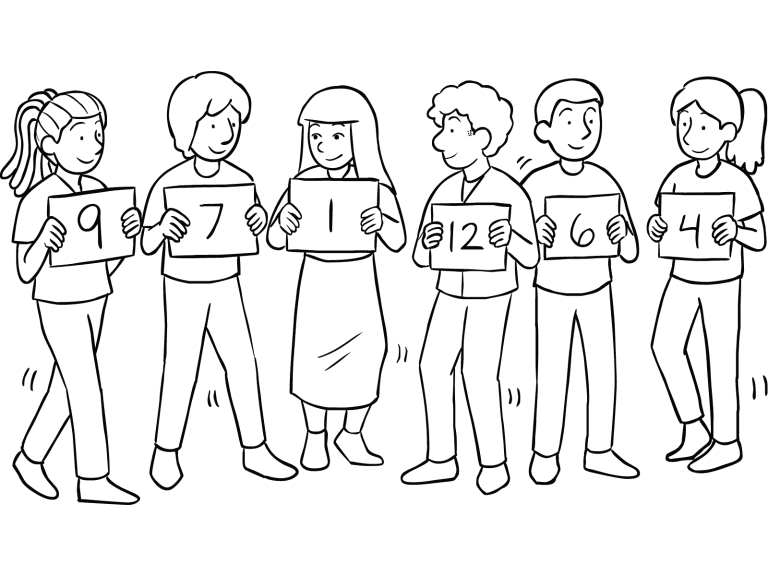
Find and touch the numbers 1 to 60, in order, as fast as you can. That’s the whole task, and it’s surprisingly addictive. Numbers Game starts with a simple timed challenge and invites people to set a goal and try again, and again, recording their results as they go. With each round, new strategies emerge and times tumble, and the changes that happen along the way make for a fascinating conversation about how teams really get better at what they do. It’s one of the simplest continuous improvement activities I know, it needs little more than a printed sheet and a stopwatch, and it works just as well online as in the room.

Recommended group size: 15 – 30 people

Typical duration: 20 – 30 minutes

Why it’s great:

  • Simple set-up
  • Measurable improvement
  • Powerful team metaphor
  • Suits all ages
  • Works online too
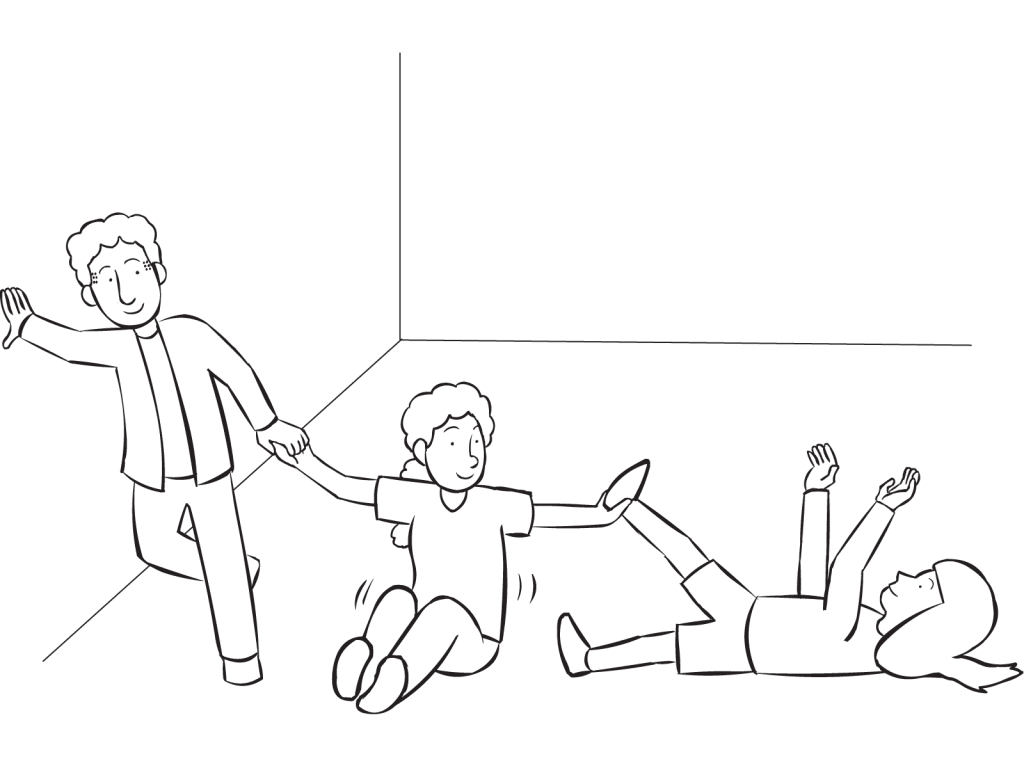
Small group of people working together in physical team-building activity Span The Room

5. Span The Room

No props, no problem. Span The Room challenges your group to connect two points, such as opposite walls, using nothing but their bodies. Easy at first. Then you start to limit which body parts may touch the ground, and the group has to get creative. Hands, feet, elbows and the occasional bottom all come into play as people experiment, plan and support one another. I love how inclusive it is, because every body counts and there are many possible solutions. Start easy, raise the challenge one step at a time, and don’t be afraid to set one your group can’t quite reach. That’s a great conversation too.

Recommended group size: 3 – 8 people

Typical duration: 20 – 30 minutes

Why it’s great:

  • No props
  • Suits all abilities
  • Many possible solutions
  • Promotes ingenuity
  • Challenge grows with your group
Dr Amy Climer headshot

Amy

Creative Consultant

"I love playmeo! I wish this site was around when I first started facilitating."

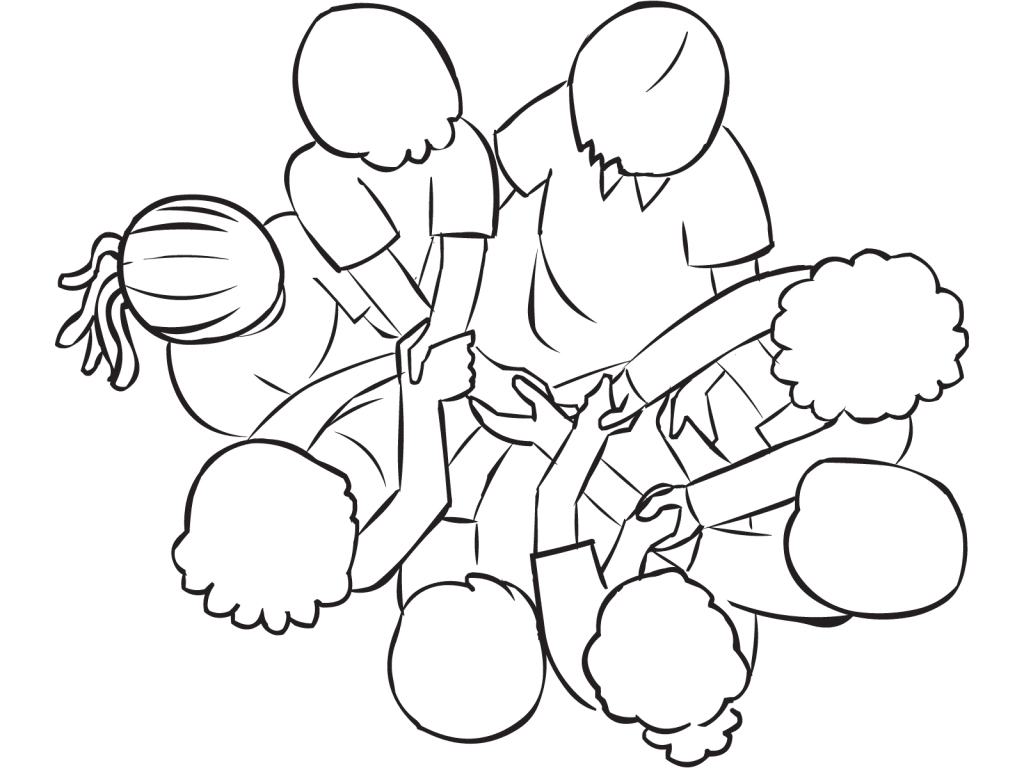
Birds eye view of group problem-solving team activity Human Knot

6. Human Knot

Yes, it’s been around forever. And yes, you may hear a groan or two when you introduce it. But there’s a reason Human Knot remains one of the best-known team-building exercises in the world. Your group joins hands across a circle to form a tangle, and must then try to untangle itself without letting go. It demands patience, focus, clear communication and plenty of empathy, as people twist, step and duck around one another. Not every knot can be undone, which is part of the lesson. On a hot day, or if your group isn’t keen on holding hands, take a look at its rope-based cousin, Knot My Problem.

Recommended group size: 8 – 15 people

Typical duration: 15 – 20 minutes

Why it’s great:

  • No props
  • A true classic
  • Demands patience & focus
  • Promotes communication
  • Rich debrief about empathy
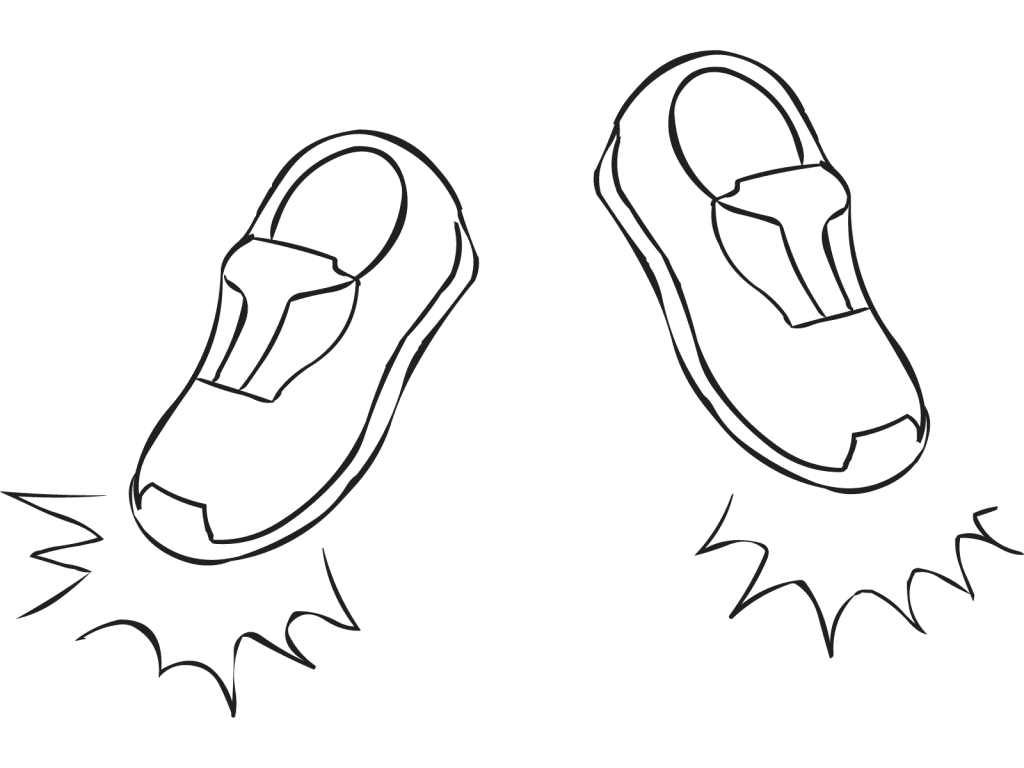
Pair of Magic Shoes ready to be used in team traversing challenge

7. Magic Shoes

Your entire group must cross a hazardous pit, and they have just one pair of imaginary magic shoes to help them do it. There’s a catch, of course – the shoes come with strict rules about how they can be used. What follows is a fabulous team-building puzzle that rewards careful planning far more than rushing in. The thinkers in your group get to shine as they map out a strategy, and everyone is needed to make it happen. Allow ample planning time, expect plenty of trial and error, and be ready for a powerful debrief if the group strands itself. It is physical, so consider your group’s abilities and your sequence first.

Recommended group size: 8 – 15 people

Typical duration: 20 – 30 minutes

Why it’s great:

  • No props
  • Physical & mental challenge
  • Rewards careful planning
  • Everyone is needed
  • Great debrief on contingency
Balls being tossed into bucket, as seen in Pick & Choose team strategy game

8. Pick & Choose

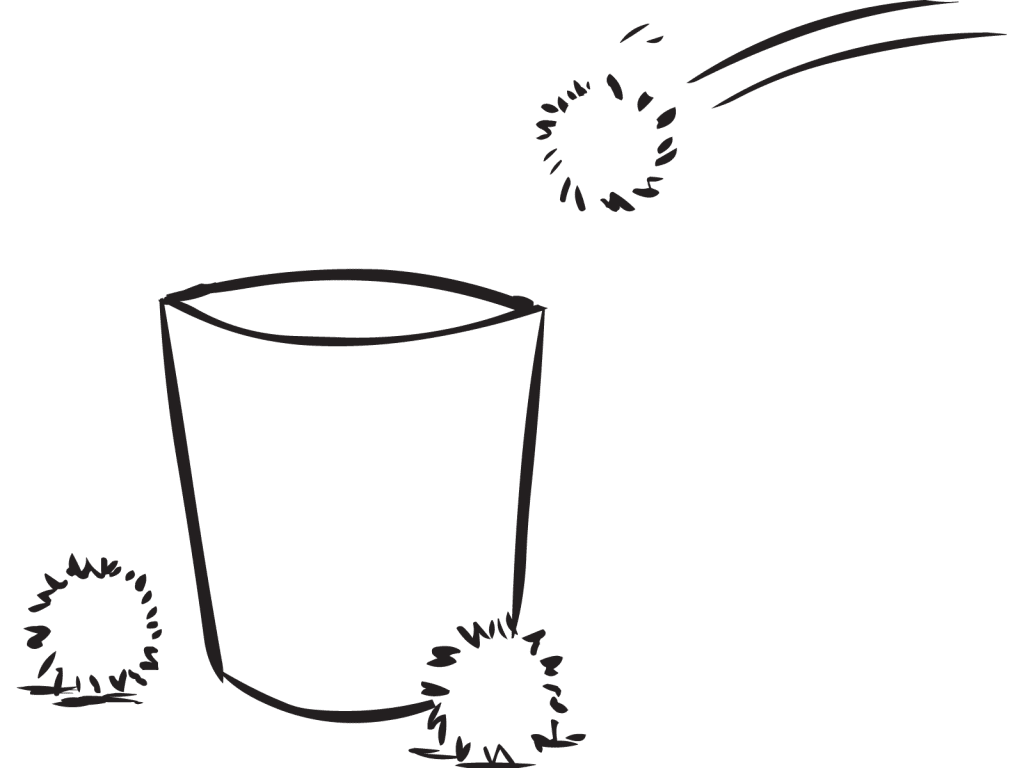
Three buckets, three distances and three point values. Your group has three one-minute rounds to score as many points as possible by tossing soft balls into the buckets, with planning time before each round. Go for the easy points, or risk it all on the far bucket? Who should throw, and who should do everything else? Pick & Choose is a terrific team strategy game because it asks the group to set a target, agree on roles and adjust its plan as the results roll in. Groups almost always aim too high at first, which opens a great conversation about goals, risk and decision-making.

Recommended group size: 15 – 30 people

Typical duration: 30 – 45 minutes

Why it’s great:

  • Simple set-up
  • Many varied roles
  • Weighs risk against reward
  • Improves round by round
  • Great for goal-setting
Pressure Cooker team coordination game with people stepping on and off numbered spots

9. Pressure Cooker

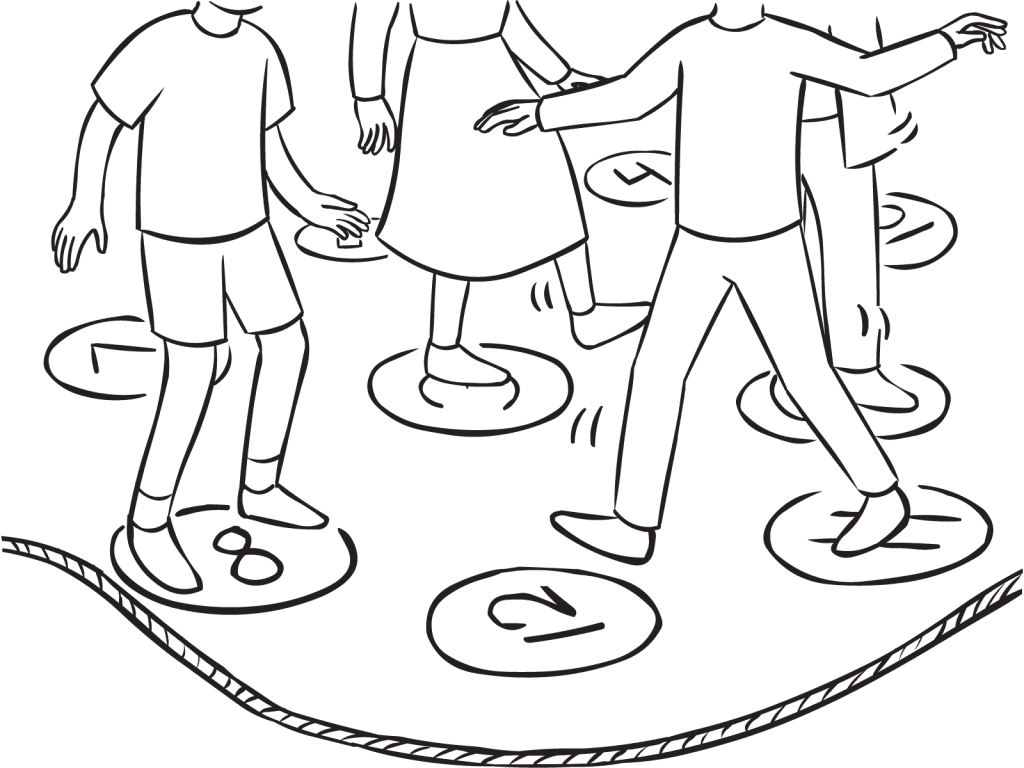
Everyone stands on a numbered spot inside a rope circle. Everyone needs to visit every other spot, in order, as quickly as possible, without colliding or stepping outside the circle. With the clock running and a dozen people criss-crossing the same small space, the pressure builds fast. Groups soon realise that individual speed counts for little without a shared plan, and that each new attempt is a chance to improve. Because it’s almost impossible for you to police every step, the honour system plays a big part, which makes it a terrific way to explore integrity and accountability alongside teamwork.

Recommended group size: 8 – 15 people

Typical duration: 30 – 45 minutes

Why it’s great:

  • Highly interactive & energetic
  • Ideal for small spaces
  • Rewards planning over speed
  • Relies on the honour system
  • Continuous improvement
Birds eye view of group solving blind team activity Blind Polygon

10. Blind Polygon

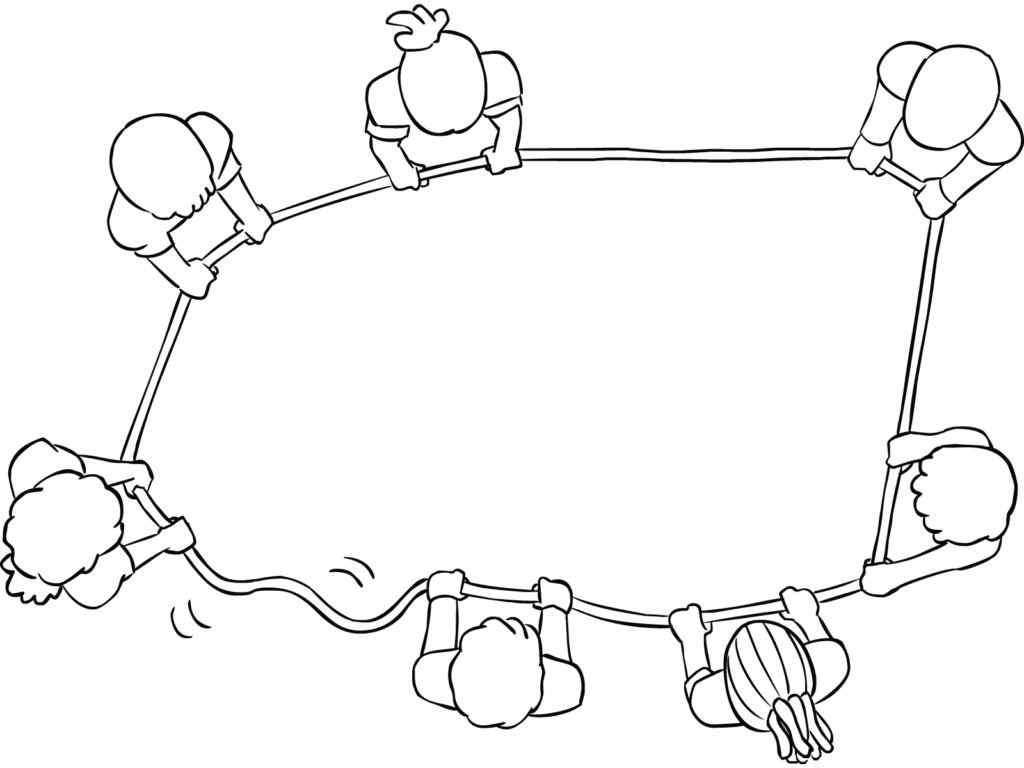
Take away your group’s sight, hand them a long loop of rope and ask them to form a simple shape. Easy, right? Not even close. Blind Polygon is one of the most demanding team-building activities I know, because success depends entirely on crystal-clear communication, patience and trust. Nobody can see the whole picture, so every voice matters and every assumption gets tested. Keep notes as you watch, because your group won’t see what you see, and your observations will be gold in the debrief. Save it for a group that has already built some trust, and allow plenty of time to talk afterwards.

Recommended group size: 8 – 15 people

Typical duration: 20 – 30 minutes

Why it’s great:

  • One simple prop
  • Highly challenging
  • Every voice matters
  • Focus on clear communication
  • Reveals leadership styles

Create Something Together

The best team-building rarely needs a big budget, a fancy venue or a day off-site. It needs an experience in which your group interacts, shares and creates something together, and a few minutes at the end to talk about what happened.

The ten team-building games and activities above will give you a great start. Begin with something light, build towards the more demanding challenges, and choose each one for a reason. As always, feel free to adapt any of these ideas to suit your group, your space and your program goals.
Above all, have fun. In my experience, the teams that play well together tend to work well together too.

Smartphone pressed forward blurred BG with activity archive 2to1

Unlock the Ultimate Toolkit

playmeo is the ultimate toolkit of icebreakers, energisers and team-building activities, trusted by thousands of group facilitators worldwide.

Subscribe today and unlock 550+ activities that will help you invite your groups to interact, share and build trusting and healthy relationships.

Subscribe Today

More Activities that Explore & Develop Teamwork Skills

shopping_bag Your Cart
Secret Link