Collaboration

Practise & strengthen collaboration skills with dozens of fun & challenging group initiatives

Almost everything worth doing these days is done with other people. Classrooms, project teams, camp cabins, boardrooms – the work gets done between people, rarely by any one of them.

Yet most of us were never taught how to collaborate. We were told to “work together” and left to figure it out. No wonder so many group projects end with one or two people doing the lot while everyone else waits to be told what to do.

Collaboration is a skill and, like any skill, it can be practised. In my experience, the quickest way to practise it is to hand your group a problem they cannot solve unless they work together, and then get out of the way. That is exactly what the collaboration activities on this page are designed to do.
What Is Collaboration?

In short, collaboration is two or more people working together to achieve a goal they share, in a way that draws on what each person brings.

It is worth being clear about what collaboration is not. A group of people sitting at the same table, each completing their own piece of a task before stapling it all together, is not collaborating. That’s a division of labour. It’s useful, but it’s not the same thing.

Collaboration occurs when the result is something no one person could have produced on their own. Consider Wikipedia. Many thousands of people who have never met have built one of the largest reference works ever assembled, each adding to, correcting and improving the work of others.

When it works, the group is often smarter than the most intelligent person in it. Working collaboratively brings multiple perspectives to bear on a group’s problem-solving and decision-making, and gives the group access to more information, expertise and skills than any one individual can offer.

Collaboration vs Cooperation (& Where Competition Fits)

These words are often used as if they mean the same thing. They don’t, and the difference is useful to understand as you plan your program.

  • Competition – I succeed only if you don’t.
  • Cooperation – I help you with your goal, and you help me with mine. We share resources and stay out of each other’s way.
  • Collaboration – We share one goal, and neither of us can achieve it without the other.

Cooperation is a fine place to start, and many groups will never need more than this. But if you need your group to solve complex problems, make decisions that stick or create something new, then you are asking them to collaborate.

For the record, competition is not the enemy. A little friendly rivalry between small teams can sharpen the teamwork within them, and several of the activities below use it for this purpose. The trouble starts when people compete out of habit, in situations where working together would serve everyone better. You’ll see this play out in Cross The Line (number 9, below.)

One of the best teambuilding activities in a corporate program

What Are Collaboration Skills?

Collaboration is less a single skill than a bundle of them. When I watch a group that works well together, I typically see people who:

  • Listen to understand an idea before they judge it
  • Share their own ideas, even the half-formed ones
  • Commit to a shared goal, especially when it wasn’t their idea
  • Take responsibility for their part, and trust others to do theirs
  • Disagree without it getting personal
  • Let go of a plan that isn’t working, and adapt

Yet, as complex and dynamic beings, many people find it hard to focus on the benefits of working together when the rewards of individual effort feel so much more immediate.

So do not be surprised if your group struggles at first. More often than not, the struggle is where the learning is.

How To Build Collaboration Skills In Your Group

There is no shortage of group activities that claim to build teamwork. What matters more is how you use them. Here are five things I’ve learned about helping groups learn to collaborate.

  1. Start small & safe – People will not share ideas with those they don’t know or trust. Open with a quick, non-threatening exercise in pairs or small groups before you ask for anything more demanding.
  2. Choose a task that needs everybody – If one or two people can solve the problem on their own, they will, and everyone else will watch. Look for challenges that cannot be completed unless every person is involved.
  3. Step back – Resist the urge to rescue your group when they get stuck. This is where it pays to be a ‘lazy facilitator‘ – the less you do, the more your group will do for itself.
  4. Give them more than one attempt – Groups rarely collaborate well the first time. Offer several rounds, with time in between to talk, and you will see the quality of their teamwork improve in front of your eyes.
  5. Talk about it afterwards – A few minutes of reflection turns a fun game into a lesson that sticks. Ask simple questions such as: What helped us to be successful? Did everyone have a valued role? How did we make decisions?

Of course, games are not the only way to develop collaborative behaviours. Inviting two or more people to co-author a report or presentation, consulting everyone for their opinion before a decision is made, and seeking feedback from your peers are all practical examples. I just happen to believe that playful group initiatives are the quickest and most enjoyable place to start.

Ben group facilitator headshot

Ben

Group Facilitator

"I always get compliments on the connection activities I use from playmeo."

10 Fun Collaboration Games & Activities for Groups

I’ve handpicked ten of my favourite collaboration games and activities from playmeo’s activity database. Some take two minutes, others up to 45. Four need no props at all. They are listed roughly in the order I would sequence them, from quick and light to more demanding.

Click the links below to scroll directly to the activity.

Four people standing in line with interlocked elbows, as part of Making Connections interactive icebreaker game

1. Making Connections

People rarely collaborate well with strangers, which is why I often start here. Making Connections is a simple, no-prop icebreaker that invites people to discover what they have in common, one person at a time. As each new link is found, the group physically builds something together – a visible reminder that everyone in the room is connected to someone else. It’s quick, it’s non-threatening and people choose what they share. By the end, your group will have a shared success under its belt and a few more reasons to talk to each other, which is just the footing they need to work well together.

Recommended group size: 8 – 15 people

Typical duration: 2 – 5 minutes

Why it’s great:

  • No props
  • People choose what they share
  • Quickly reveals common ground
  • Whole group creates one result
  • Works online too
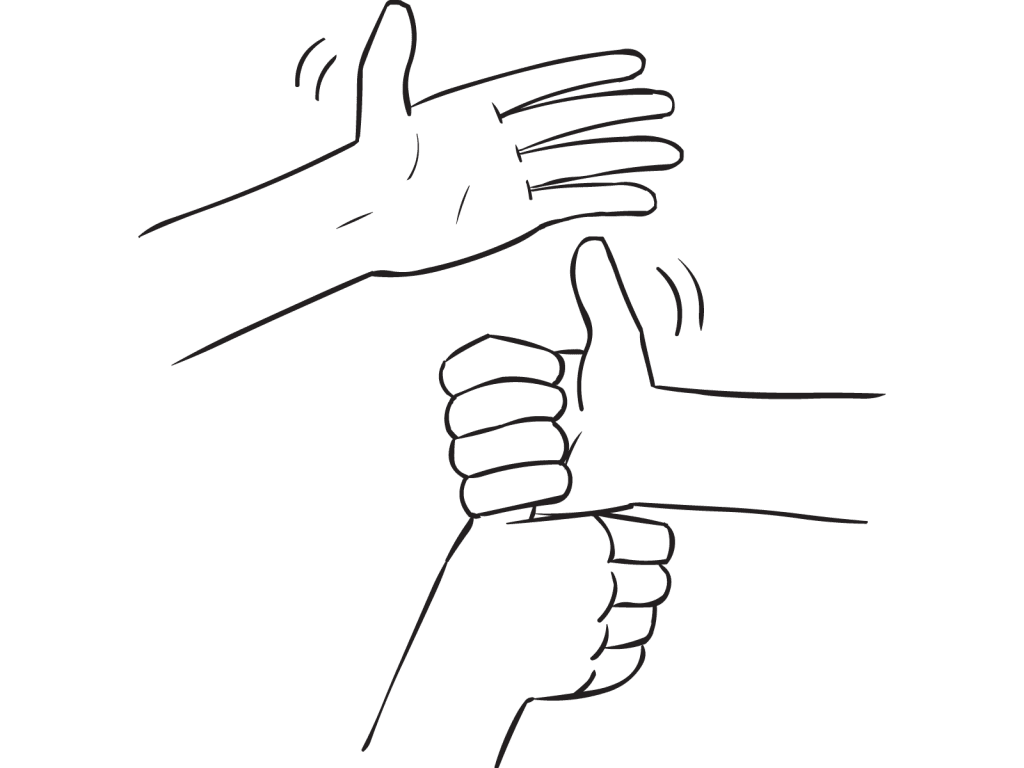
Three hands forming a stack of joined hands by holding thumbs as part of quick team-building exercise Lumberjack Stack

2. Lumberjack Stack

Don’t let the short time-frame fool you. Lumberjack Stack starts as a playful greeting between partners and quickly grows into a whole-group challenge with no single right answer. As more people get involved, the group has to experiment, share ideas and make room for everyone – literally. I love it as an introductory collaboration game because the stakes are low and the laughter comes easily, yet it draws out the very behaviours you want to see later, eg people offering ideas, listening to others and adjusting on the fly. There’s no set-up, and it suits almost any group.

Recommended group size: 8 – 15 people

Typical duration: 2 – 5 minutes

Why it’s great:

  • No props
  • Quick & simple
  • Many possible solutions
  • Involves every person
  • Inspires creativity
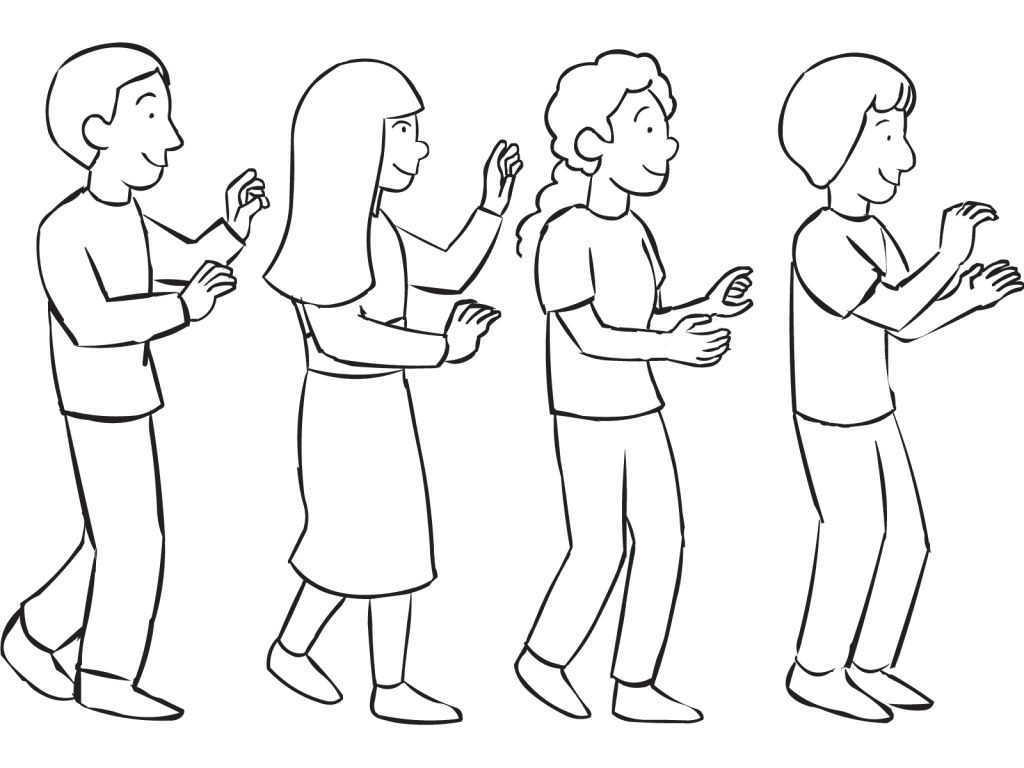
Four people standing in a line following instruction in the quick energiser game Bobsled Teams, perfect for team-building games for students

3. Bobsled Teams

Have a large group? Bobsled Teams is a fast, loud and hilarious energiser that asks small teams to respond to a series of commands as quickly and accurately as they can. The magic occurs between rounds. Give your teams a couple of minutes to refine their routine and you will see collaboration in miniature – people sorting out roles, agreeing on signals and helping each other to get it right. Then a final twist tests whether those skills travel. It’s brilliant for conferences, camps and school groups where energy matters as much as the learning.

Recommended group size: 30+ people

Typical duration: 10 – 15 minutes

Why it’s great:

  • No props
  • Ideal for large groups
  • Hilariously fun
  • Practise & improve between rounds
  • Highly energetic
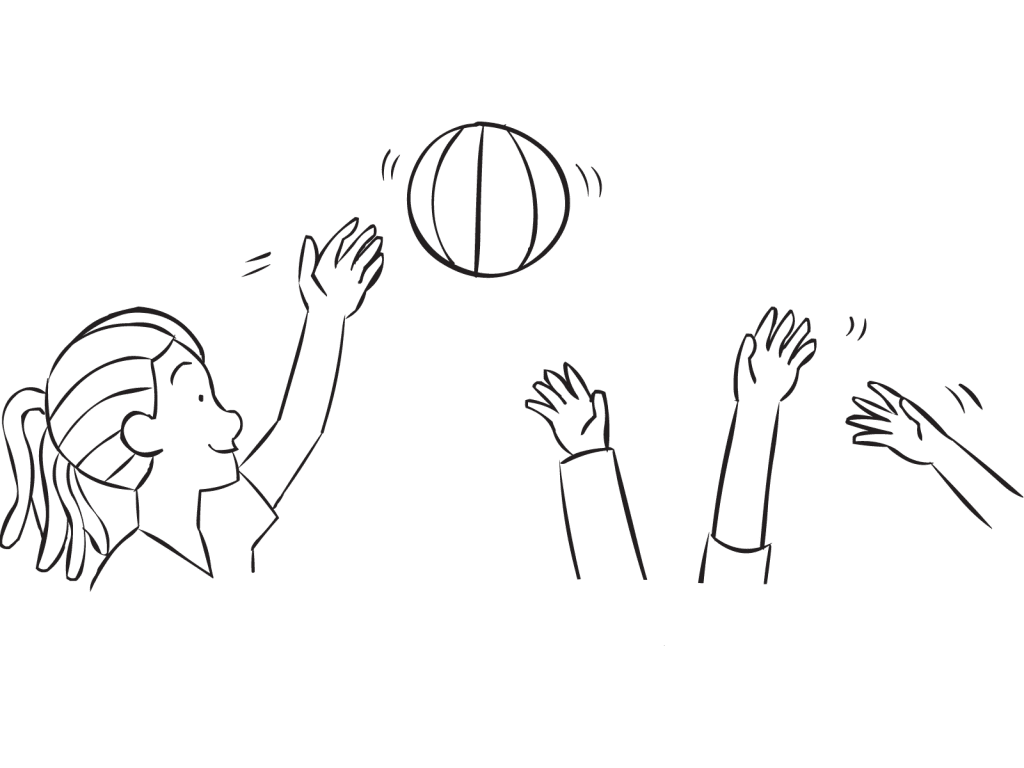
Woman hitting beach ball in air above other hands, as featured in energetic team challenge Moonball

4. Moonball

All you need is a beachball. Moonball sets your group a shared target, and the only way to reach it is for everyone to get involved. There are no positions and no stars, and the ball’s flukey flight makes a novice of everybody. Groups soon learn that enthusiasm alone won’t get them there, so they start to plan, communicate and include the people who were standing at the edges. Once your group hits its target, invite them to set a new one. It is one of the most playful ways I know to explore collaboration and goal-setting in the same exercise.

Recommended group size: 15 – 30 people

Typical duration: 15 – 20 minutes

Why it’s great:

  • One simple, fun prop
  • Shared & measurable goal
  • Levels the playing field
  • Involves everyone
  • Multiple variations
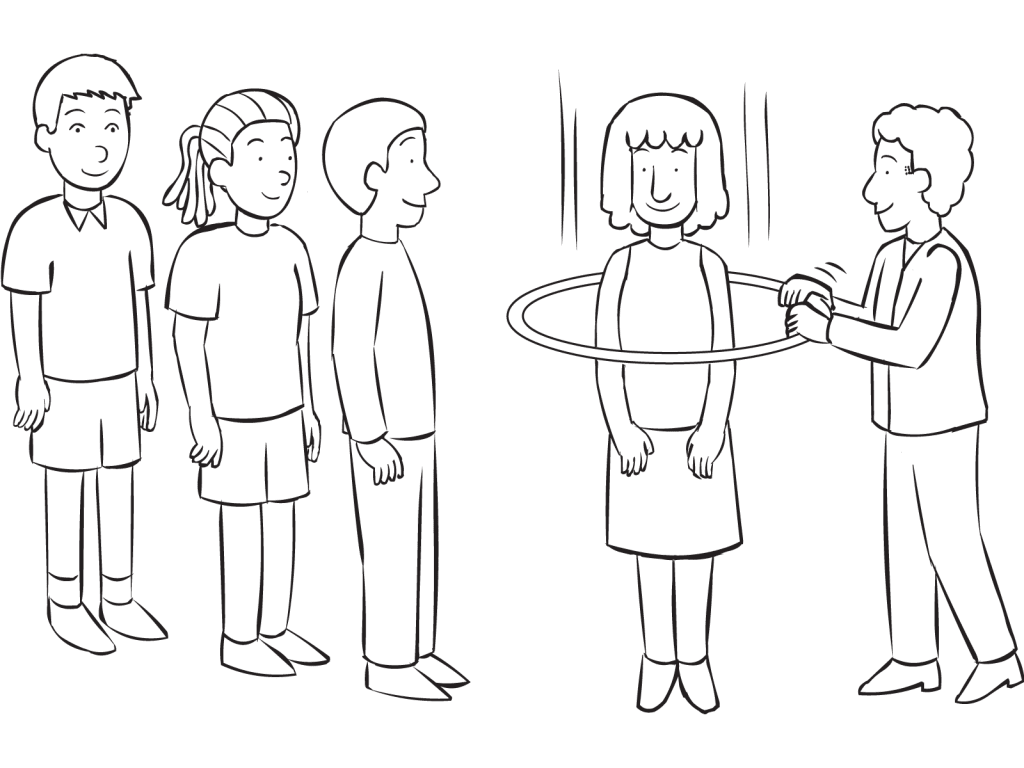
Man passing hula hoop over every person in small group, as seen in continuous improvement exercise Through The Wringer

5. Through The Wringer

If you want your group to experience continuous improvement first-hand, this is the one. Through The Wringer presents a simple physical task and a stopwatch. The first attempt is usually slow and messy. Then the group talks, someone suggests a new idea, and the time drops. And drops again. Many groups finish with a time they would never have believed possible at the start, which makes for a terrific conversation about what changed. Hint – the answer usually has more to do with how well the group shared and tested its ideas than how fast any one person moved.

Recommended group size: 8 – 15 people

Typical duration: 20 – 30 minutes

Why it’s great:

  • Playful & fun
  • Simple to set up
  • Rewards trial & error
  • Improvement you can measure
  • Focus on goal-setting
Susie corporate trainer headshot

Susie

Corporate Trainer

"Having tons of activities isn't nearly as valuable as having the RIGHT activity for the RIGHT context - playmeo has it all."

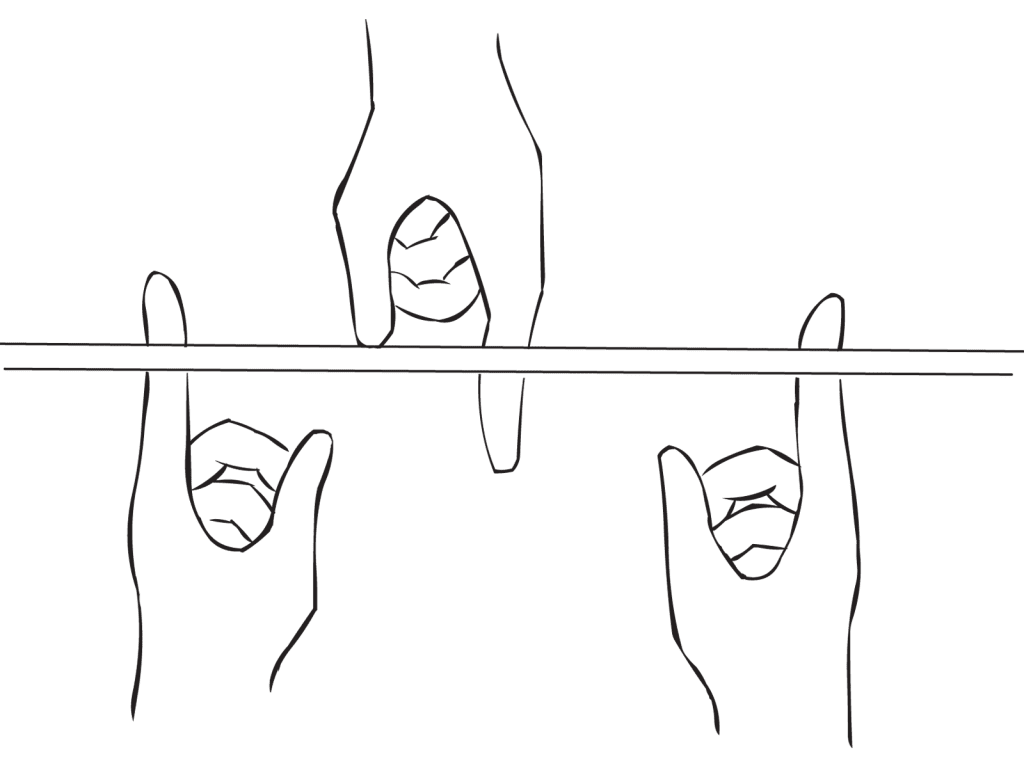
Three hands and fingers underneath a straight stick as seen in team cooperation challenge Helium Stick

6. Helium Stick

Simple, but not easy. Helium Stick asks a small group to complete a task that sounds as though it should take ten seconds. It won’t. The harder each individual tries, the worse things seem to get, and frustration (and laughter) arrives quickly. What the group eventually discovers is that success depends on everyone moving as one, and this takes patience, clear communication and a good dose of honesty. It’s a classic for good reason. Few team collaboration activities show so clearly how one person’s actions affect everyone else. Expect your group to ask to try it again.

Recommended group size: 3 – 8 people

Typical duration: 10 – 15 minutes

Why it’s great:

  • Simple, but not easy
  • One light-weight prop
  • Shows the impact of individual actions
  • Highlights integrity & honesty
  • Addictive
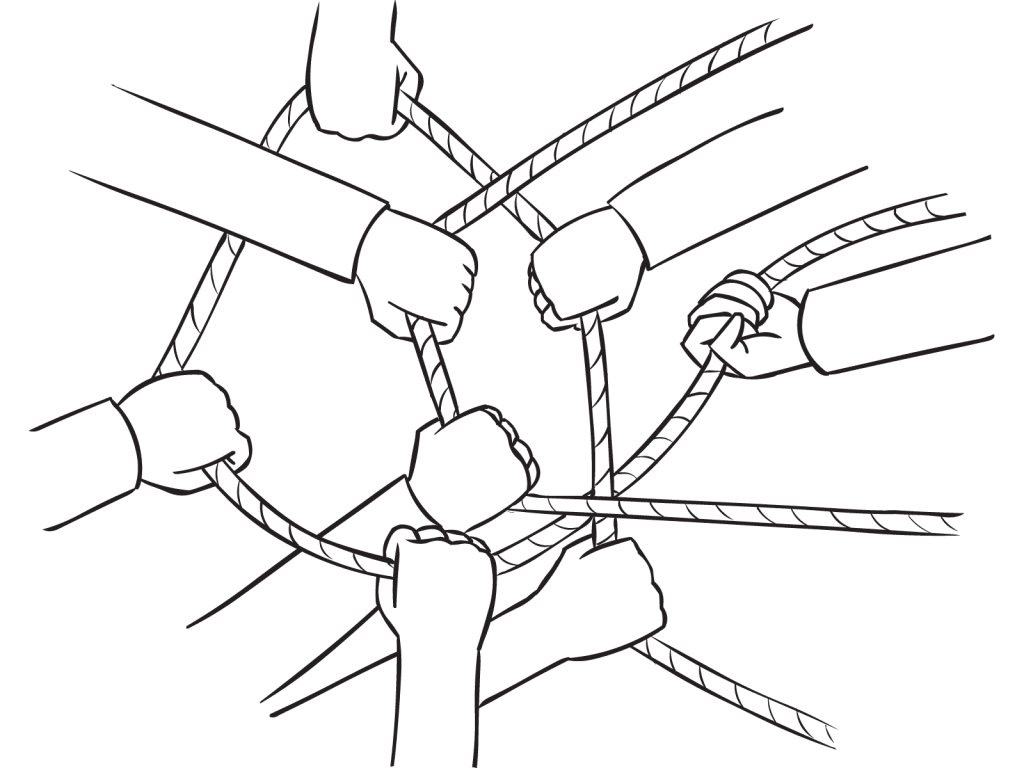
Group of hands holding onto a crossing of ropes as part of team problem-solving activity Knot My Problem

7. Knot My Problem

You may know the classic Human Knot. This variation uses a long rope instead of hands, which means more people can be involved with far less discomfort. Your group starts with a tangle and a simple objective. Getting there is another matter. No one can see the whole problem from where they stand, so people have to describe what they see, listen to others and agree on what to try next. Watch for who leads, who follows and who goes quiet – there will be plenty to talk about afterwards. A terrific collaborative problem-solving activity for teams, classes and leadership groups.

Recommended group size: 8 – 15 people

Typical duration: 15 – 20 minutes

Why it’s great:

  • Needs only a long rope
  • Everyone has a role
  • Promotes communication
  • More comfortable than Human Knot
  • Rich debrief about roles
Sticks of spaghetti poked into a marshmallow, as seen in classic team-building activity Marshmallow Challenge

8. Marshmallow Challenge

A handful of everyday items, a strict time limit and one deceptively heavy marshmallow. The Marshmallow Challenge has been run with groups all over the world, and it remains one of the best ways to watch how small teams work together under pressure. Do they spend most of their time planning, or start experimenting early? Do they test their assumptions? Does everyone get a say? Teams compete against one another, which adds a little spice, but success is decided by what happens inside each team. The lessons that bubble up afterwards apply to almost any project your group will tackle next.

Recommended group size: 3 – 8 people

Typical duration: 20 – 30 minutes

Why it’s great:

  • Playful & fun
  • Simple, inexpensive props
  • Rewards experimentation
  • Friendly competition between teams
  • Many metaphors
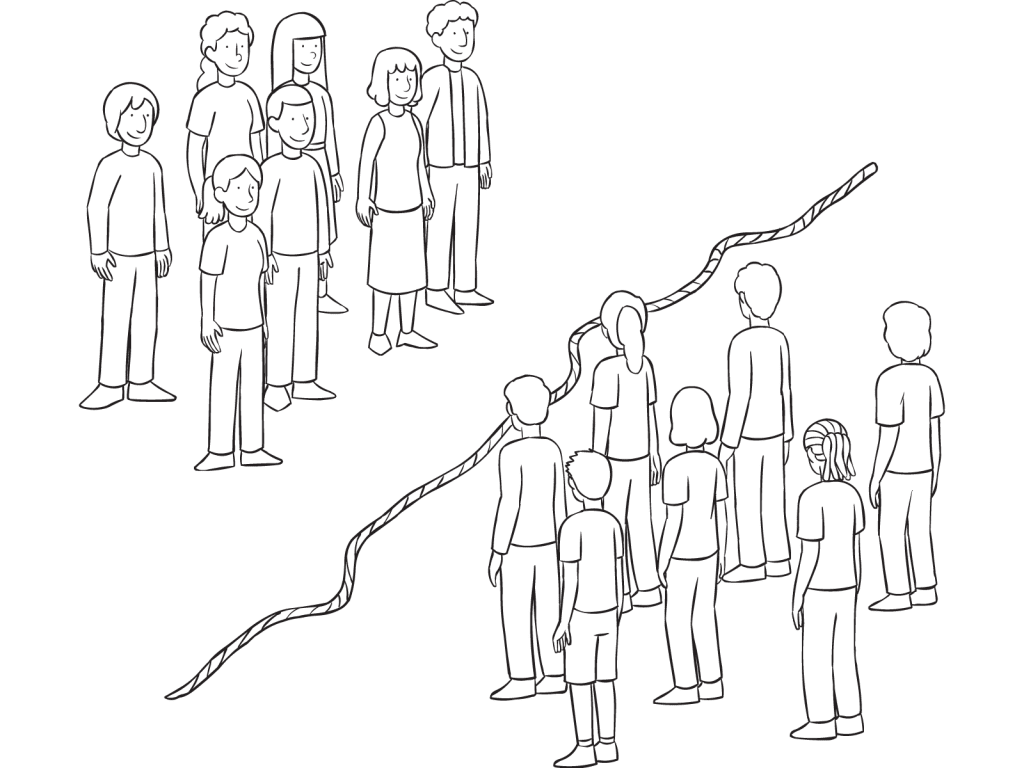
A team negotiation exercise, with two groups of people, standing either side of a rope, not wanting to cross the line

9. Cross The Line

This is the exercise I reach for when I want a group to confront its own assumptions. Two teams, one line and a goal that I state only once. That’s it. What happens next says a great deal about how we have been conditioned to think. Most groups assume they have been set a contest, and behave accordingly. I won’t spoil the ending, but the conversation that follows – about collaboration versus competition, win-win thinking and what we assume without checking – is often the most valuable part of a program. It needs little more than a rope and very little movement, yet it’s anything but passive.

Recommended group size: 15 – 30 people

Typical duration: 15 – 20 minutes

Why it’s great:

  • Minimal equipment
  • Explores assumptions
  • Contrasts collaboration & competition
  • Develops critical thinking
  • Powerful debrief
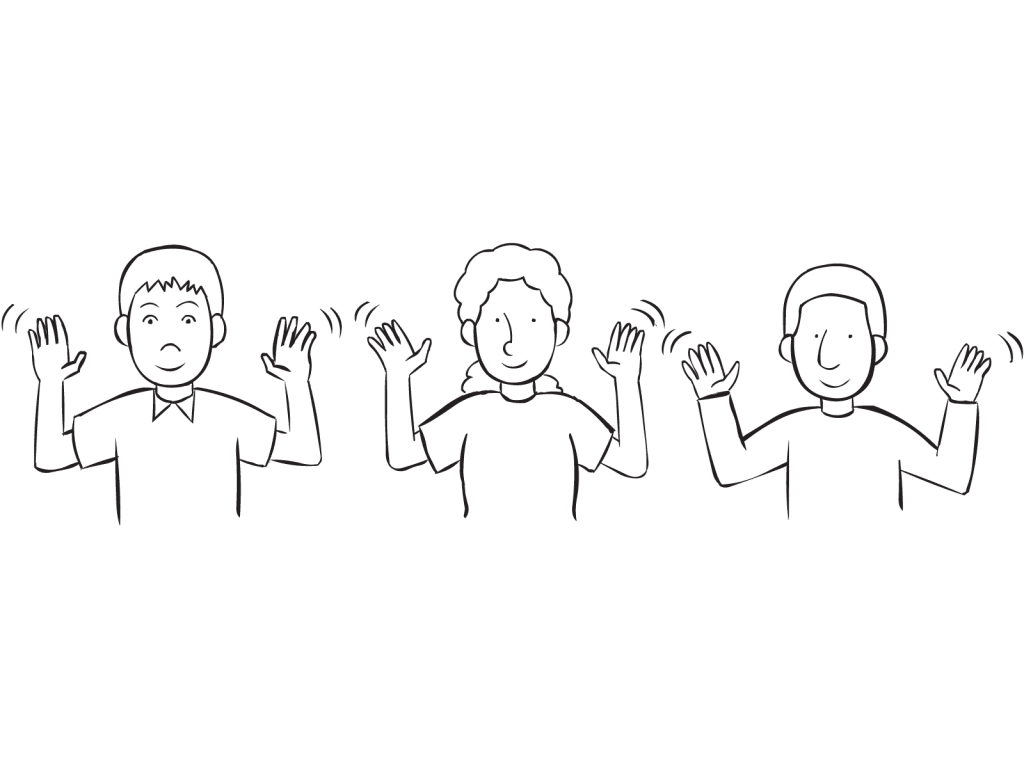
Three people imitating the same gesture with hands in the air, as seen in Negotiation team-building activity

10. Negotiation

Negotiation is a spectacular group initiative, and the most demanding activity on this list. Several small teams are challenged to reach consensus without ever speaking to one another. They can only observe, talk within their own team and adapt. In my experience, it brings up many issues about compromise and letting go – two things every group must wrestle with if it is to collaborate well. Achieving consensus is almost beside the point, because there is often more value in exploring how the teams managed their differences along the way. Allow plenty of time for reflection, and save it for groups that have already built some trust.

Recommended group size: 15 – 30 people

Typical duration: 30 – 45 minutes

Why it’s great:

  • No props
  • Very dynamic
  • Focus on consensus
  • Explores compromise & letting go
  • Strong real-world metaphors

Bringing It All Together

Telling people to work together has never been enough. Groups learn to collaborate when they have a good reason to, a safe place to practise and the time to talk about what they noticed.

The ten collaboration activities above give you all three. Start with something quick and light, build towards the more demanding challenges and always leave a few minutes at the end to reflect. As always, feel free to adapt any of these ideas to suit your group, your space and your program goals.

Above all, have fun. In my experience, groups that laugh together find it a whole lot easier to work together.

Desktop laptop smartphone activity archive transparent

Unlock the Ultimate Toolkit

playmeo is the ultimate toolkit of icebreakers, energisers and team-building activities, trusted by thousands of group facilitators worldwide.

Subscribe today and unlock 550+ activities that will help you invite your groups to interact, share and build trusting and healthy relationships.

Subscribe Today

More Activities that Explore Successful Teamwork & Cooperative Skills

shopping_bag Your Cart
Secret Link