

The Inclusion Problem With Most Icebreakers
Most icebreakers come with unacknowledged assumptions.
They assume everyone can move freely, that physical contact is universally comfortable, that language barriers won’t be an obstacle, or that all abilities are represented equally. In diverse groups – and most real-world groups are diverse in ways that aren’t always visible – these assumptions create quiet exclusions.
The person who can’t participate fully tends not to say anything. They just step back, or watch, or manage their way through an activity that wasn’t designed with them in mind. As a facilitator, you may not even notice it’s happening.
After nearly four decades of working with groups of all kinds, I’ve become increasingly attuned to this problem. Which is why the activity I’m about to describe matters to me as much as it does.

"Many icebreakers fall short, but playmeo's are super-reliable - it's my go-to activity spot."
What’s In a Name?
The activity is called What’s In a Name. It requires nothing except people and a little bit of space.
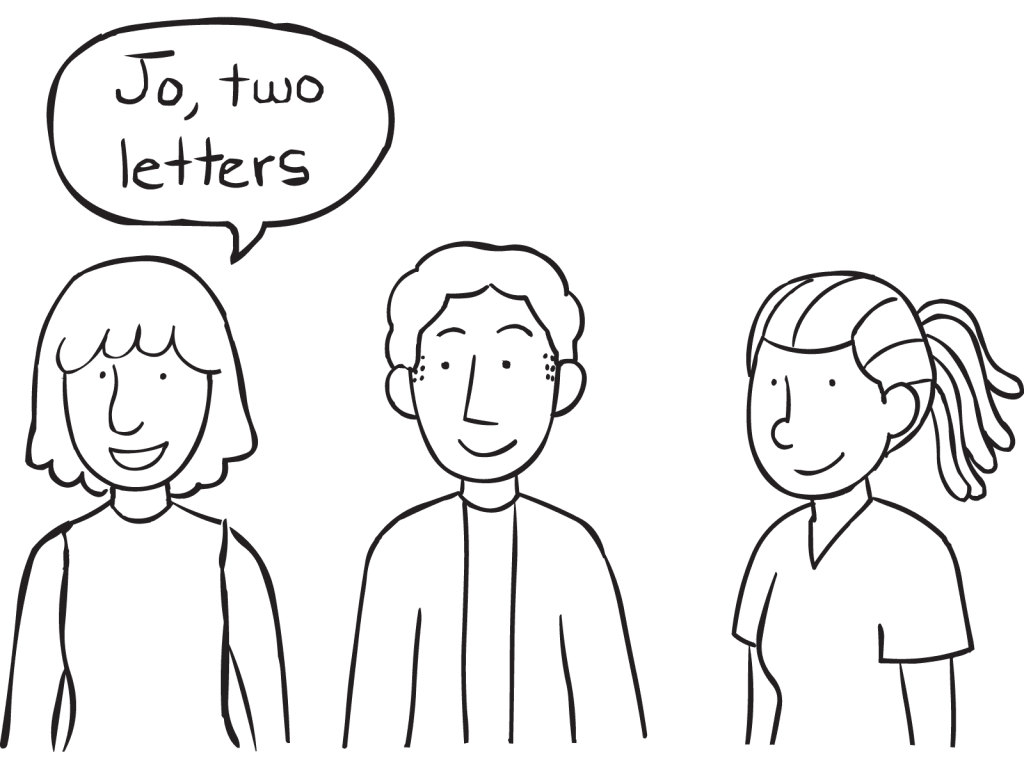
Here’s how it works. Ask everyone to count the letters in their first name. Then invite the group to form a line from the fewest letters to the most. Celebrate the people at each end — they’re the gold medallists of round one.
Then add middle names to the count and rearrange the line. Then add last names for the complete total. Three rounds, each one adding a new layer, each one re-sorting the group and revealing something new.
My own score: Mark Alan Collard – four, plus four, plus seven – fifteen letters. Not many, as it turns out.
Why It Works for Every Group
What makes this activity so consistently effective is its universality.
- Every person has a name.
- Counting letters requires no physical ability, no language fluency beyond basic numeracy, no props, and no risk of embarrassment.
- There is no winner, no loser, no performance required.
Yet the process of forming and reforming a line creates natural conversations. People compare counts, discover unexpected ties, ask about middle names they’ve never heard before.
The activity surface is simple; the connections it generates are genuine.
Participants who might ordinarily feel peripheral in a high-energy icebreaker are, in this one, just as central as everyone else. Their name is celebrated three times over.
The Detail That Makes It Memorable
There’s a moment in this activity that I find particularly moving: the applause for the person at each end of the line. It’s a small gesture, but it works because it’s sincere. Every round produces new gold medallists, which means multiple people receive that moment of recognition.
In a group where some people habitually go unnoticed, that matters.

Unlock the Ultimate Toolkit
playmeo is the ultimate toolkit of icebreakers, energisers and team-building activities, trusted by thousands of group facilitators worldwide.
Subscribe today and unlock 550+ activities that will help you invite your groups to interact, share and build trusting and healthy relationships.

Comments (0)
expand_circle_downThere are currently no comments